
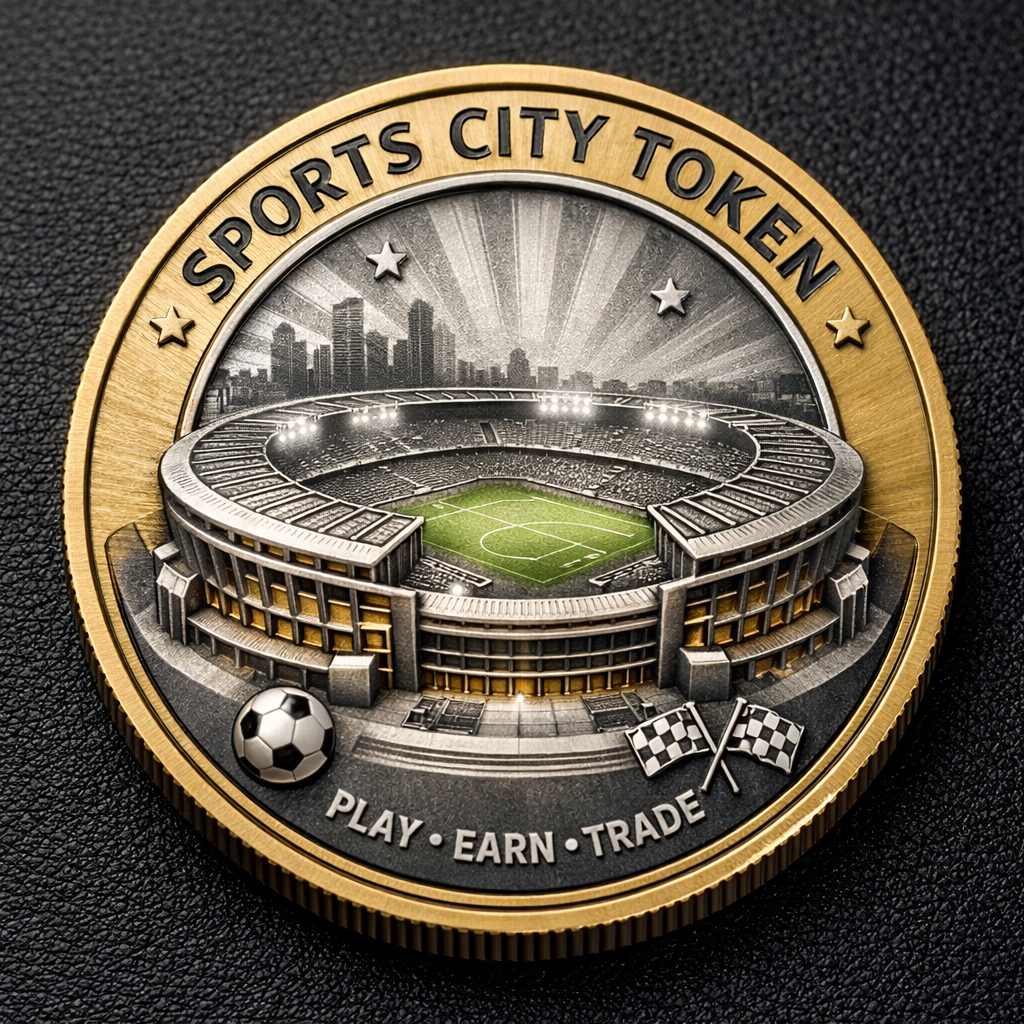
Sport has always done something strange and wonderful. It turns strangers into allies. It creates shared emotion at industrial scale. For a few hours, millions of people agree on the same rules, cheer the same moments, and accept the same outcome. No referendum required.
The Sports City Token, powered by Ndeipi, begins with a simple philosophical observation: if sport already unites people, why not let it also unify ownership, capital, and long-term prosperity?
From Stadiums to Systems
Traditional sports infrastructure follows a familiar pattern. Public money builds the stadium. Private interests extract the upside. Fans supply loyalty, culture, and spending power, but rarely participate in ownership or value creation beyond buying tickets and merchandise.
The Sports City Token flips this model.
A Sports City is not just a stadium. It is an ecosystem: housing, retail, training facilities, media rights, tourism, academies, esports, wellness, data, and culture. These are cash-flowing assets, not abstract dreams. The token becomes a digital wrapper around this real economic engine.
Ownership stops being symbolic. It becomes programmable.
Tokenization as Civic Architecture
Tokenization is often misunderstood as financial alchemy. In reality, it is accounting with memory. The Sports City Token represents fractional participation in the economic life of the city itself: revenues, usage, growth, and governance logic encoded transparently.
Powered by Ndeipi’s real-world asset rails, the token allows capital to circulate locally and globally at the same time. Diaspora fans can invest alongside local communities. Supporters become stakeholders. Youth academies become investable pipelines of talent rather than charitable afterthoughts.
This is not speculation layered on sport. It is structure layered on value that already exists.
Sport as a Neutral Language
Politics divides by design. Culture fragments. Algorithms reward outrage. Sport quietly ignores all of that.
A goal still matters. A finish line still decides. A championship still ends the argument.
Sports Cities leverage this neutrality. They create zones where cooperation is natural, not forced. Where people from different backgrounds participate in the same economic loop because they already share emotional alignment. The token does not invent unity. It formalizes it.
Why This Matters Now
Cities around the world are searching for new growth models. Debt is expensive. Trust is scarce. Young people are disconnected from ownership entirely.
Sports Cities offer a different path. Land becomes equity. Fans become capital. Sport becomes infrastructure. Liquidity is engineered without selling the soul of the club or the city.
The Sports City Token is not about replacing the love of the game with finance. It is about making sure the value created by that love stays within the community that generates it.
The Bigger Idea
At its core, this is a philosophical project disguised as urban development.
It asks a quiet but radical question: what if the things that unite us emotionally also united us economically?
Sport already does the hard part. It brings people together. The Sports City Token simply ensures that when unity creates value, everyone standing in the stadium has a way to own a piece of the future they helped build.
In a world obsessed with division, that might be the most practical form of optimism left.
Leave a Reply