
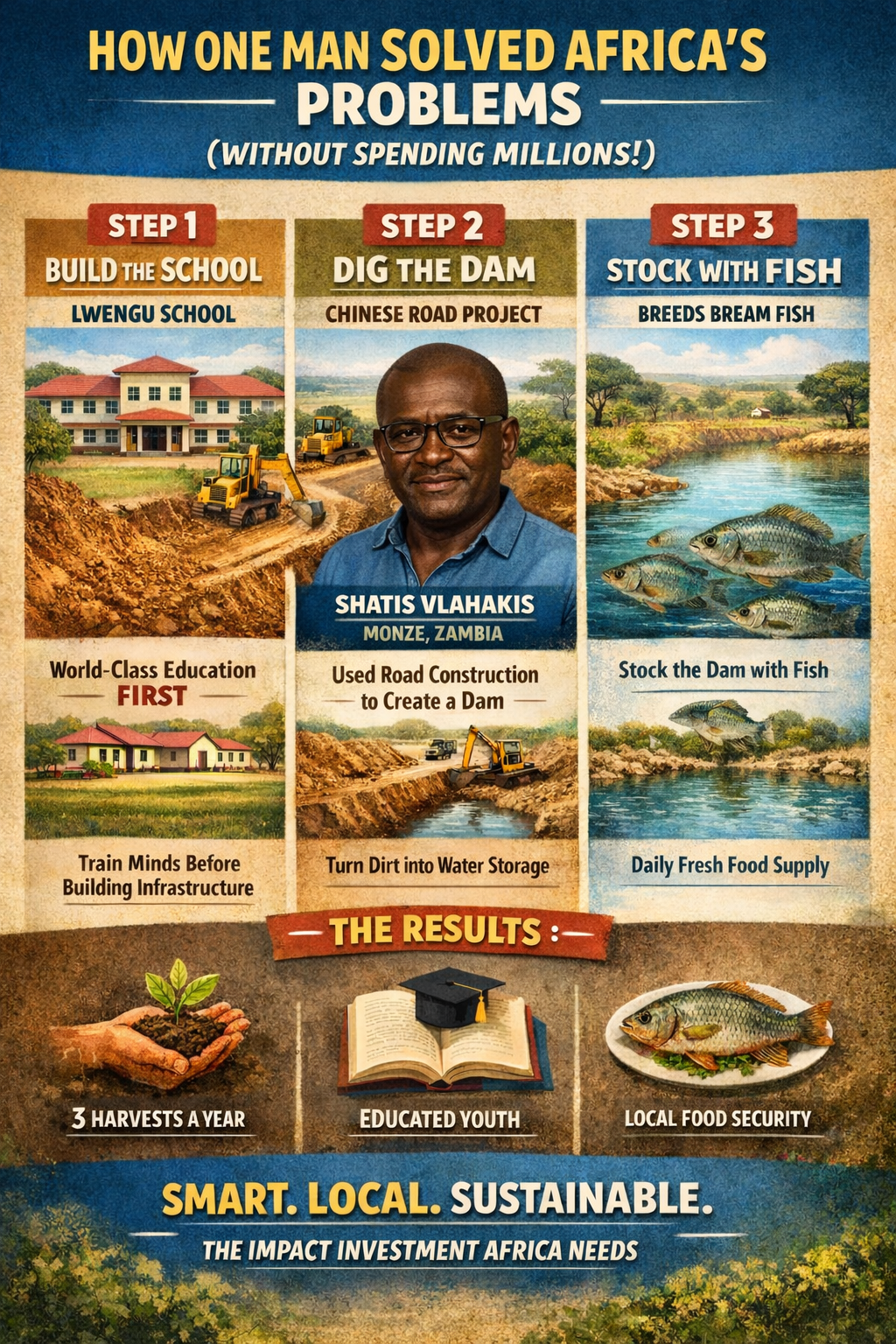
(And It Didn’t Cost Millions)
Africa has been flooded with aid, consultants, pilot programs, and promises. Yet millions of farmers still wait for rain like it is fate. Food insecurity persists. Schools struggle. Impact investors keep asking the same question: why is nothing sticking?
The answer is uncomfortable.
Most solutions ignore infrastructure sequencing.
My uncle, Shatis Vlahakis, never used the phrase “impact investing.” But what he built in Monze quietly outperformed most funded development projects on the continent.
He did not start with a dam.
He did not start with donors.
He started with a school.
Step One: Build the Mind Before the Asset
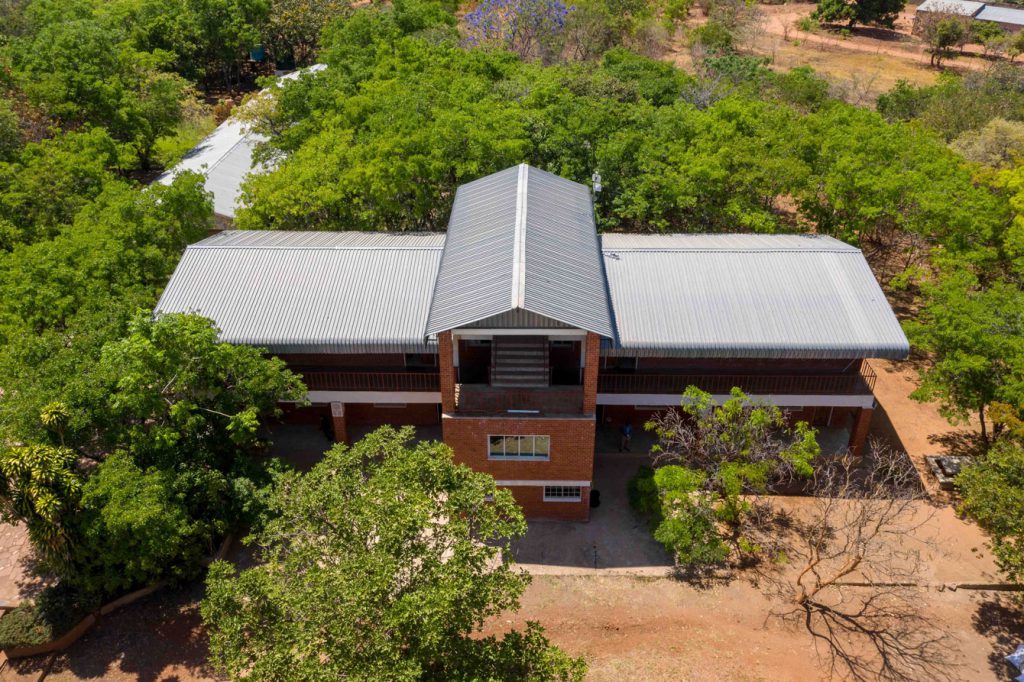
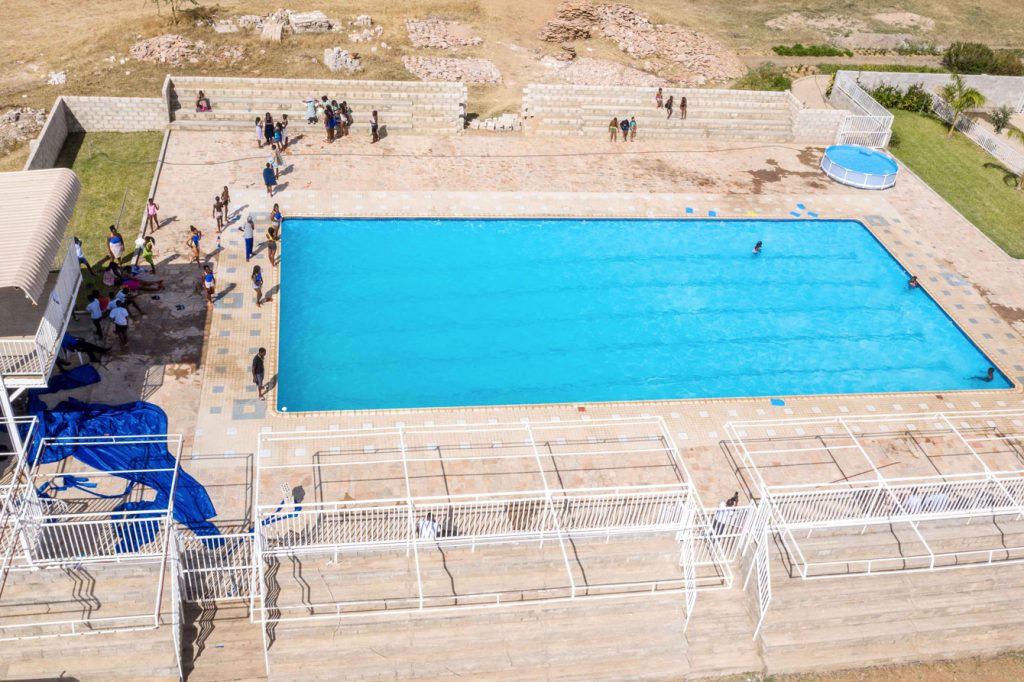
In rural Zambia, he built Lwengu School, now regarded as one of the most prestigious private schools in Africa. This was not charity education. It was serious, disciplined, world class schooling designed to produce people who build things rather than wait for permission.
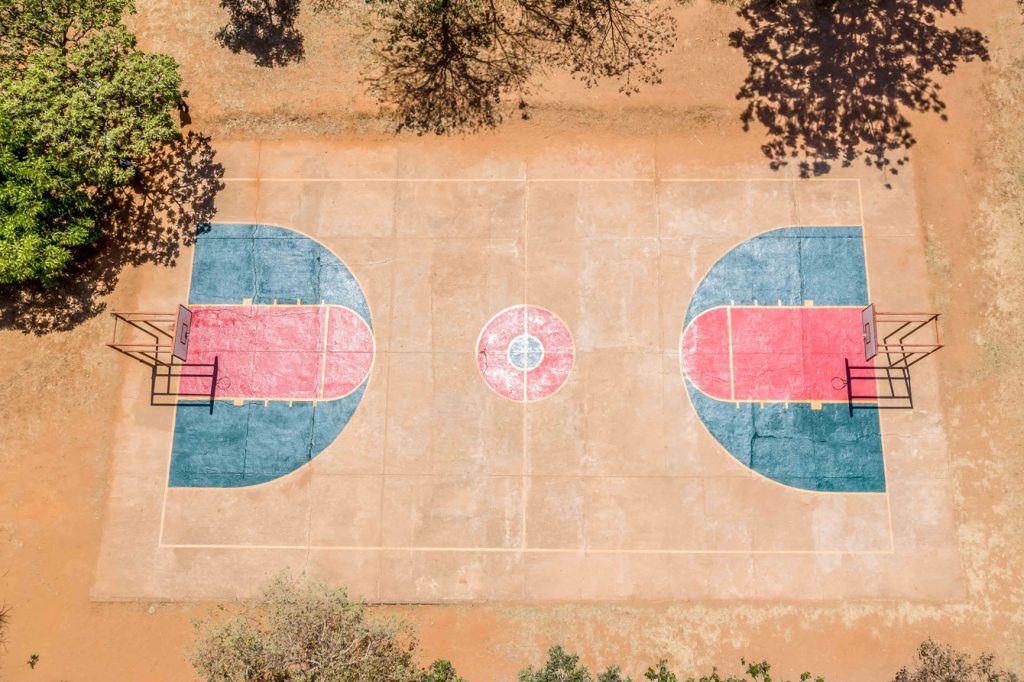
Most people would have done the opposite. Fix water first. Fix farming first. Fix survival first.
That logic fails everywhere.
Infrastructure without educated stewards decays. Schools without stability struggle. He understood that education is infrastructure too, just slower and more powerful.
Step Two: Turn a Road Project Into a Dam
Years later, a Chinese contractor arrived under the Belt and Road Initiative to build roads. As required, they went to local chiefs to ask for soil for the roadbed. The chiefs wanted to charge them for dirt.
This is where most development efforts stall.
Shatis made a different offer.
Take as much soil as you want. For free.
One condition. Dig where I tell you to dig.
The contractors agreed.
They thought they were collecting dirt.
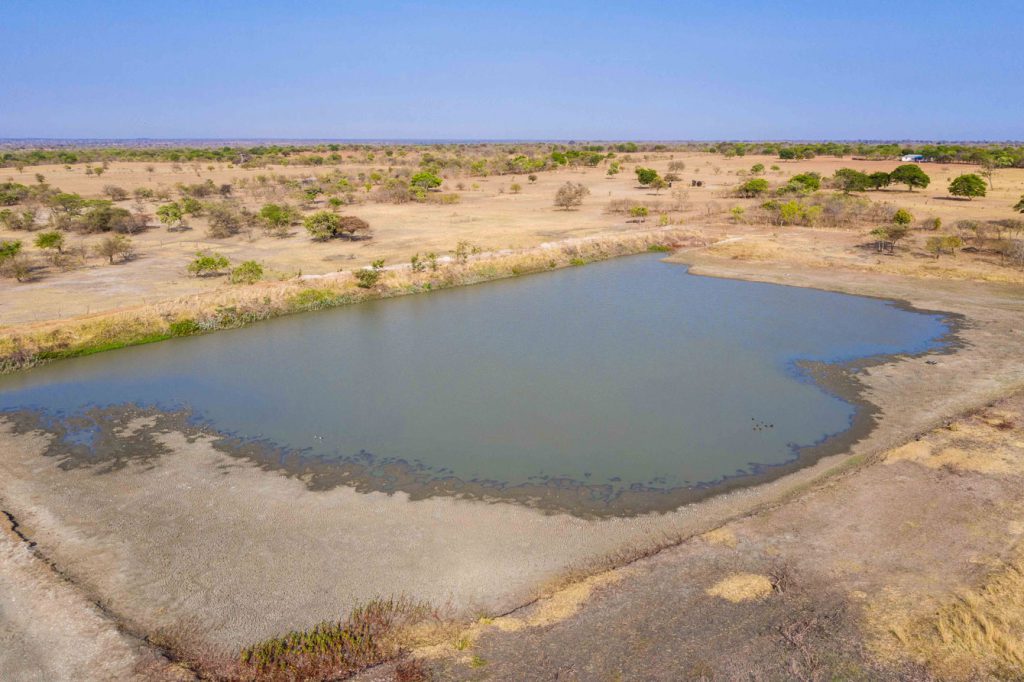
They were actually excavating a dam.
No new budget. No feasibility study. No parallel project. Road construction created water infrastructure as a side effect. Rainfall stopped running away and started being stored.
This is what real systems thinking looks like on the ground.
Step Three: Add Fish and Close the Loop
Once the dam filled, he stocked it with bream fish.
That single decision transformed water into daily nutrition.
Today, he fishes every day. Lunch is fish. Dinner is fish. Fresh protein. No supply chains. No imports. No dependency. The fish reproduce themselves. The system feeds itself.
Water became food.
Food stabilized families.
Stable families sustained the school.
The loop closed.
Why This Is the Impact Investment Africa Actually Needs
Let’s be blunt. Much of what passes for impact investing in Africa is extractive finance with better branding. Short funding cycles. External control. Metrics that disappear when the money does.
This model is different.
One school created stewards.
One road project created a dam.
One dam created food security.
The cost was minimal. The impact is permanent.
This is how you unlock multiple farming seasons without waiting for rain. This is how you reduce hunger without subsidies. This is how education stops being fragile. This is how dignity returns.
Africa does not lack ideas.
It lacks people who think in second and third order effects.
Teach a man to fish and he will feed himself for a lifetime only works if someone first makes sure there is water.
This is the kind of impact investment Africa should be scaling. Quiet. Local. Intelligent. Built once. Feeding people every single day.
And the most frustrating part?
It has been hiding in plain sight the whole time.
Leave a Reply