
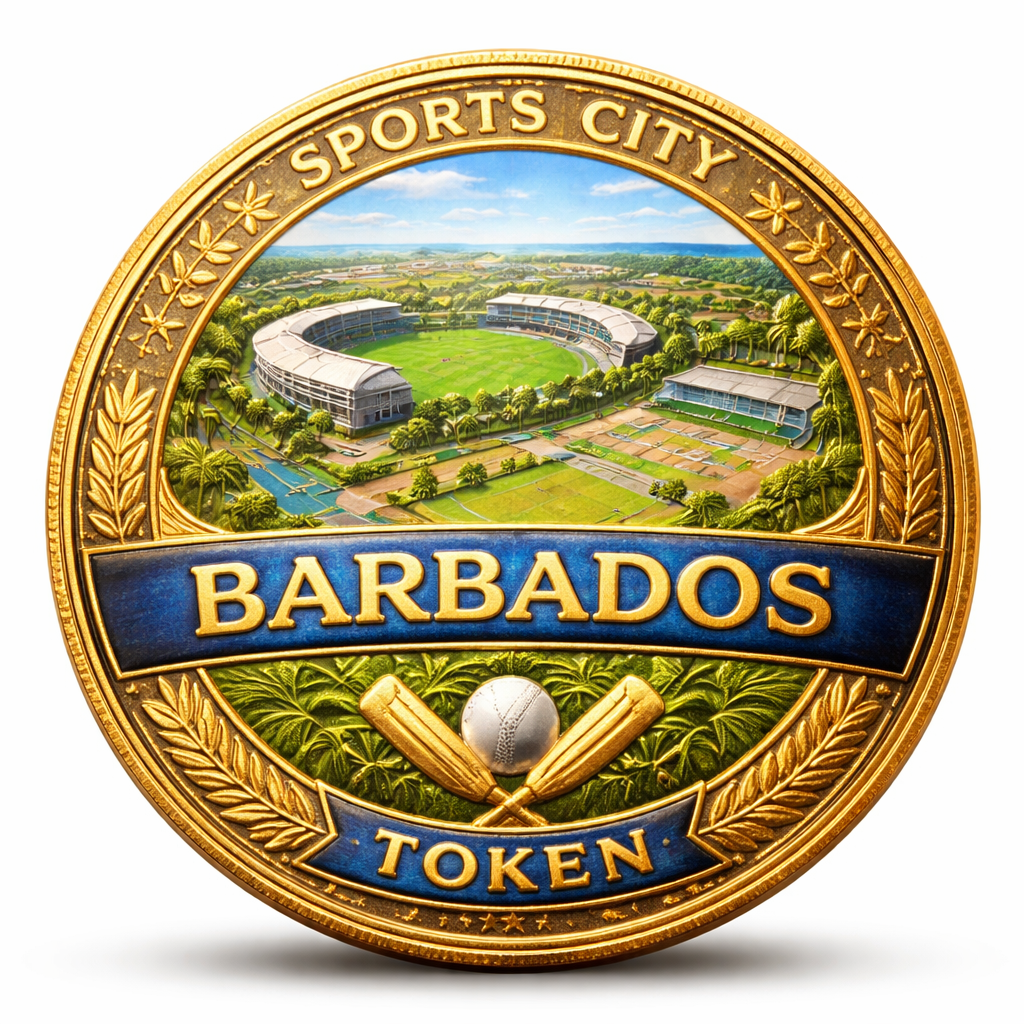
The RWA Sports City Token sits at the financial core of one of the most ambitious sports infrastructure projects in the Caribbean. This is a $400 million Sports City development in Barbados, delivered in collaboration with the Government of Barbados, which has committed 100 acres of land to the project as its contribution.
That detail matters more than most people realize. Land is not a press release. Land is balance sheet reality.
Why the 100 Acres Changes Everything
When a government commits 100 acres, it does three powerful things simultaneously.
First, it anchors the project permanently in national interest. This is not a temporary concession or a revocable lease hidden in fine print. The land becomes the foundation of a long-term economic engine.
Second, it establishes a hard, non-speculative asset base for tokenization. Real World Asset tokens live or die on credibility. One hundred acres of strategically allocated land in Barbados gives the Sports City Token a tangible, independently verifiable anchor.
Third, it allows capital to flow in without burdening the state with additional debt. Instead of borrowing against the future, Barbados is contributing land equity and allowing private and diaspora capital to fund construction, activation, and growth.
What the RWA Sports City Token Represents
The RWA Sports City Token is not a meme coin and not a vague promise of “future utility.” It is a digitized economic claim on a real, operating sports ecosystem built on government-contributed land.
At a structural level, the token is designed to represent exposure to:
- The underlying land value of the 100-acre Sports City site
- Revenue generated by facilities built on that land
- Commercial activity tied to sport, tourism, media, and events
- Long-term appreciation of a national-scale sports hub
The blockchain does not replace the asset. It becomes the coordination and settlement layer that makes the asset investable at global scale.
From Land to Liquidity
Traditionally, a project like this would be funded through a mix of sovereign borrowing, development banks, and a small circle of institutional investors. Liquidity would be limited, access would be narrow, and transparency would be slow.
Tokenization changes the shape of the capital stack.
The Sports City Token allows the economic value of that 100-acre site to be fractionalized and accessed by a much broader group: global sports fans, diaspora investors, institutional allocators, and long-term believers in Caribbean growth. Capital becomes more liquid, ownership more distributed, and governance more programmable.
Adrian Griffith and Athlete-Led Design
A critical difference in this project is leadership from within sport itself. Adrian Griffith brings athlete-first logic into a capital-intensive development.
That matters for token holders. Infrastructure designed by athletes performs better economically because it gets used properly. Training facilities attract repeat bookings. Academies retain talent. Events scale sustainably. The asset does not sit idle.
When utilization is high, revenue follows. When revenue follows, token economics become real instead of theoretical.
Revenue Is the Oxygen
The RWA Sports City Token is intended to be supported by multiple revenue streams, not a single bet:
- Elite training camps and academies
- International and regional tournaments
- Sports tourism and off-season training
- Media, broadcasting, and content production
- Commercial leases, hospitality, and retail
- Sports science, rehab, and performance services
This diversification is what turns a large land parcel into a compounding economic system rather than a single-purpose venue.
Transparency, Governance, and Trust
One of the quiet advantages of an RWA structure is visibility. Tokenized systems can expose performance metrics, audited revenues, and governance rules on-chain. That transparency is especially important when public land is involved.
Done correctly, the Sports City Token aligns incentives across government, operators, athletes, and investors. Everyone benefits when the city performs. Everyone loses if it does not. That alignment is rare in traditional infrastructure finance.
A Blueprint, Not a One-Off
The deeper implication is that this is a model, not just a project. A government contributes land. Private and diaspora capital fund development. Blockchain provides liquidity, transparency, and coordination. Sport provides the cultural engine.
If successful, the RWA Sports City Token becomes a template that can be replicated across other Caribbean nations and emerging markets, each time anchoring global capital to local assets and local people.
One hundred acres is the starting point. What is being built on top of it is a new way to finance national ambition without mortgaging the future.
Leave a Reply