
I said not yet.
Then everything changed.
Essay · Innovation · Waterloo
What happens when you walk into a room full of the world’s most creative young builders — and realise you have exactly what they are missing.
Dr. Tyrone Moodley Founder & CEO, Ndeipi Inc. · MD Capital Strategy, Migodi-Auric Ltd.
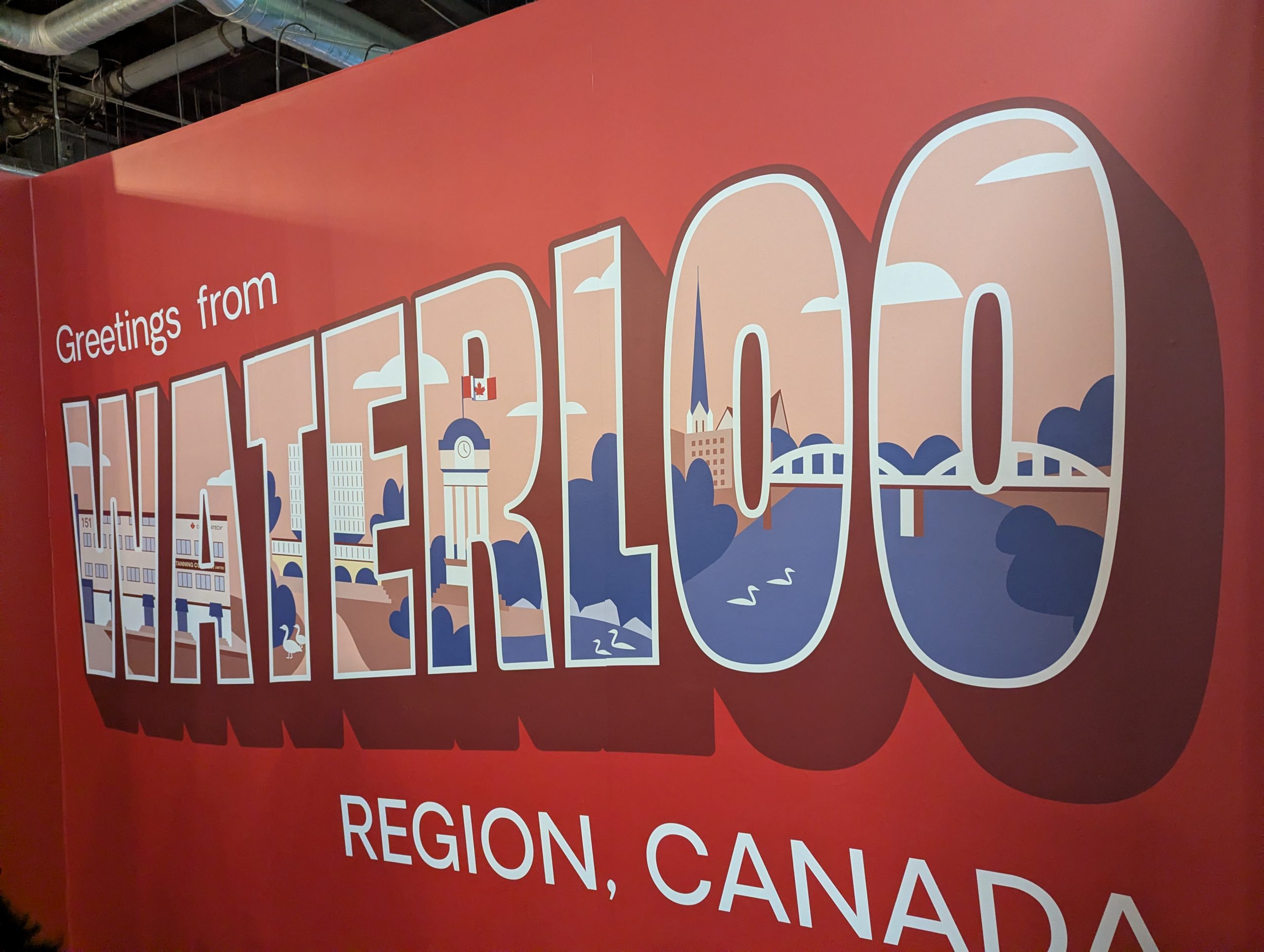
I did not plan to go to the Socratica Symposium on Saturday. I was in Kitchener-Waterloo for other reasons, walking past the Innovation District tram station, and someone mentioned it. So I went. And then I stayed much longer than I intended to, because what was happening inside that room was impossible to walk away from quickly.
2,500+ Builders gathered
70+ Projects presented
1 Question that landed
What I walked into
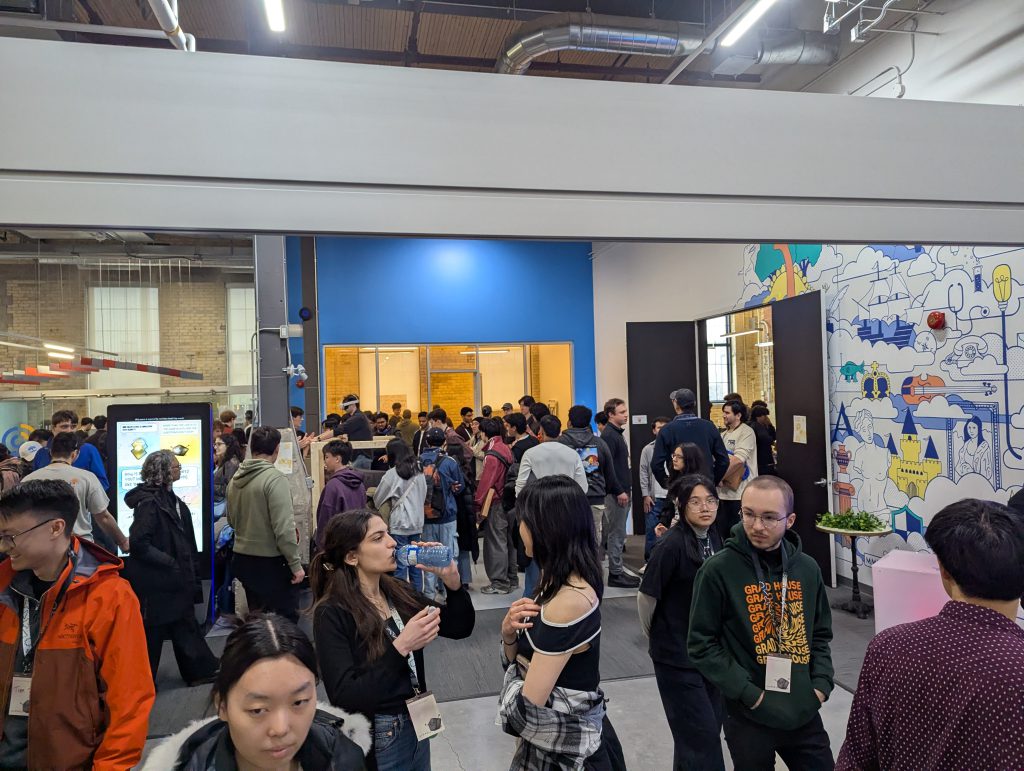
Socratica began as a small group of University of Waterloo students who wanted to build things for the love of building. It has since grown into something the organisers describe as a global movement. This year, they took over the entire Waterloo region across two days. There were thousands of people. The energy was the kind that is almost impossible to manufacture — because it wasn’t manufactured. It was genuine.
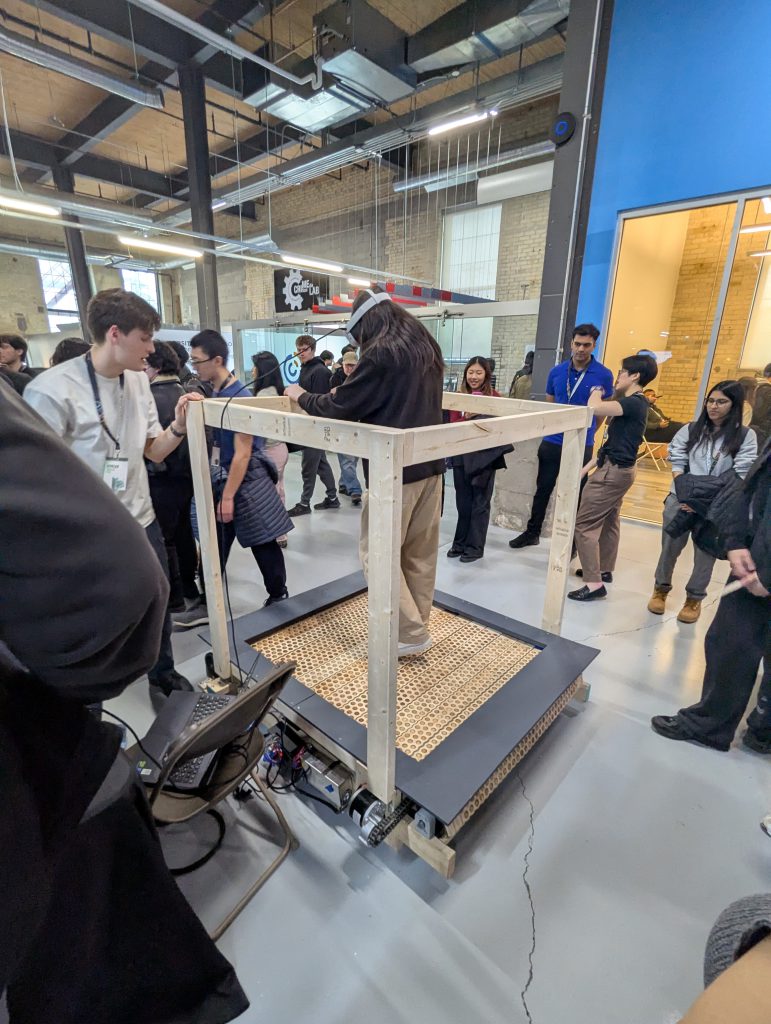
A high school student had 3D-printed his own professional DJ studio equipment. Not a prototype. Not a proof of concept. A complete, working studio. I stood in front of it for a while, trying to understand how a teenager with no institutional backing had produced something that looked like it belonged in a product catalogue. The answer, when he explained it, was simple: he just kept going until it was done.
There were game developers building worlds I wanted to live in. Lighting engineers whose work made the room feel different. Artists who had turned code into something that had no business being as beautiful as it was. Researchers. Designers. Founders who hadn’t given themselves that title yet. All of them building, in the words of Socratica itself, because they couldn’t help themselves.
Socratica provides the social permissioning to try something new.— Anson Yu, University of Waterloo systems design engineering
That phrase — social permissioning — is one of the most accurate descriptions of what innovation ecosystems actually do that I have encountered. Not funding. Not infrastructure. Permission. The sense that it is acceptable to try, to fail in public, to show something unfinished, to be seen building. That is what Waterloo has built, and it is more valuable than most people outside this region understand.
The question
I was standing near one of the project displays when a founder walked over and asked me directly: “Are you a VC?”
I said not yet. It made me laugh, because I was there as a visitor, not as capital. But the question lodged itself somewhere and wouldn’t let go. Because looking around that room, the honest answer was: I could be something more useful than a VC to these people. A VC writes a cheque. What I have is infrastructure.
I have spent years building the institutional architecture to turn invisible productive assets into legible financial instruments — gold cooperative societies in Zambia, copper production networks, solar-powered AI compute, tokenised real-world assets on blockchain. The gap between that work and what these students were building was not as wide as it might appear. A DJ controller 3D-printed in a bedroom needs exactly the same thing that an artisanal gold mine in Eastern Province needs: a pathway from production to market that doesn’t require institutional permission to begin.
The realisation
The Waterloo-to-Lusaka talent corridor I have been designing for the Ndeipi Institute of Technology in Lusaka, Zambia — these are the students who belong in it. The infrastructure already exists on one end. The talent already exists on the other. The only thing missing is the connection.
The Solana conversation
The founder who asked if I was a VC and I kept talking. I told him what I was building — cooperative economies in Zambia, NdeipiCoin as a 21-million hard-cap security token backed by physical gold and copper, AI compute containers running on solar energy, a gaming ecosystem using a gold-backed stablecoin as in-game currency. His eyes changed when I mentioned crypto. He said: his partner is one of the lead people at Solana. Could he introduce me?
The Solana lead walked over. We talked. He invited me to the developer event in Toronto this Friday.
My CTO has already built Solana integration
Our CTO — a 20-year collaborator — completed Solana integration into our stack before this conversation happened. I am not walking into Friday’s room with a pitch. I am walking in with working infrastructure on their chain.
Dual-chain architecture — Polygon for RWAs, Solana for gaming
NdeipiCoin settles on both chains. Polygon handles institutional instruments — Coop Coins, Coop Bars, the Afro Gold Dollar, FCGS cooperative equity. Solana handles high-frequency gaming transactions in Cyber Wars and Protocol Wars, where throughput and near-zero gas matter most.
The Solana Foundation has significant developer grant budgets
Projects with existing integration on the chain are exactly who those grants are designed for. The conversation on Friday is not about asking for permission to build. It is about reporting that we already have.
What Waterloo is, and what it means
I have worked across Zimbabwe, the United States, and Canada for twenty-five years. I have seen innovation ecosystems up close in many forms. What Waterloo has built is genuinely unusual. It is not the money — there are wealthier cities. It is not the infrastructure — there are bigger campuses. It is the culture of permission. The institutional belief, transmitted from faculty to founders to students to high schoolers with 3D printers, that the act of building is its own justification.
Socratica is the most refined expression of that culture I have seen. A student collective, founded in 2022, that now fills a hockey arena and takes over a regional innovation district annually. Run entirely by students. Funded by passion. Growing because builders attract builders, and Waterloo has been collecting builders for fifty years.
What began as a handful of friends in a classroom has grown into a global movement.— Socratica, on their own origin story
The Africa I am building toward needs exactly this. Not charity. Not development assistance. A permission structure. An institutional signal that says: your productive capacity is real, your ingenuity is real, your output has value in global markets — and here is the infrastructure to prove it.
The Ndeipi Institute of Technology in Lusaka, Zambia is designed to be the Socratica of the Southern African corridor. Weekly builder sessions. Cross-disciplinary projects. The understanding that a cooperative miner who has learned to identify ore bodies and a software engineer who has learned to build blockchain settlement systems are both builders — and that they belong in the same room.
Saturday was a reminder of what that room feels like when it works. I left the Innovation District tram stop with a Solana introduction, a Friday invitation, and a clearer sense of who the Waterloo-to-Lusaka corridor is actually for.
It is for the kid with the 3D-printed DJ studio. It is for the miner in Eastern Province who has never been told that what he produces has a price on the London Metal Exchange. It is for anyone who kept building without waiting for permission — and who is now ready for the infrastructure to catch up with their output.
If you are building in Waterloo — let’s talk.
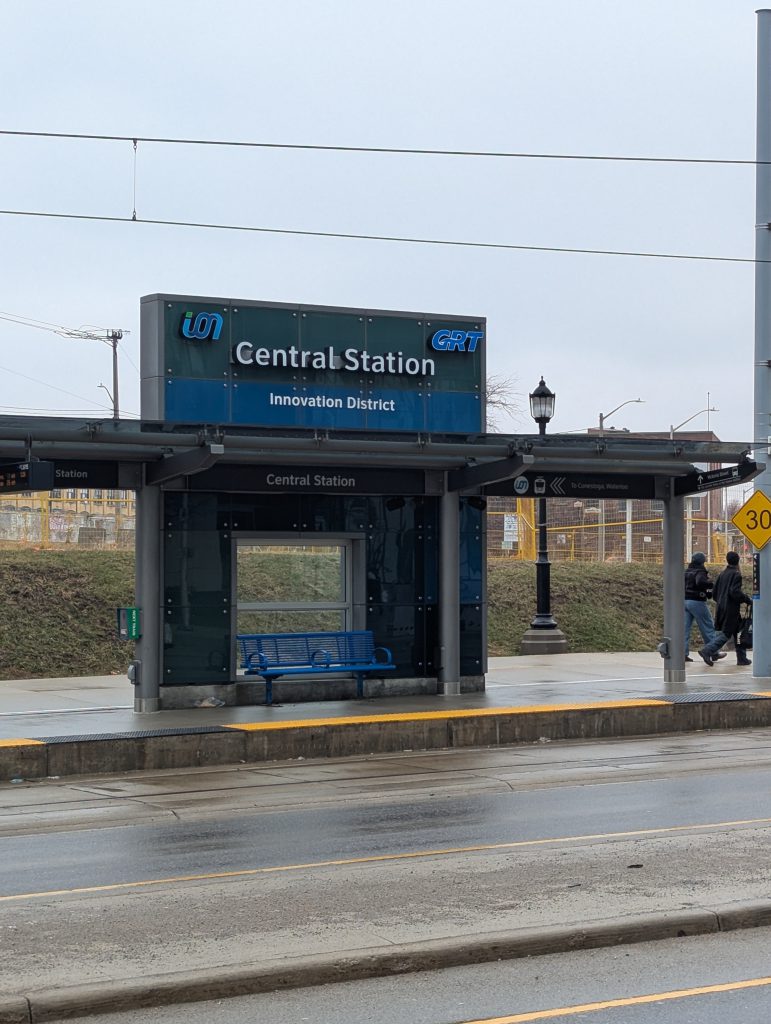
The Innovation District tram stop is a good place to start. Or find me at the Toronto developer event this Friday.
#Waterloo #Socratica #Ndeipi #RealWorldAssets #Africa #NdeipiCoin #Solana #Web3 #Waterloo #InnovationDistrict
Leave a Reply